
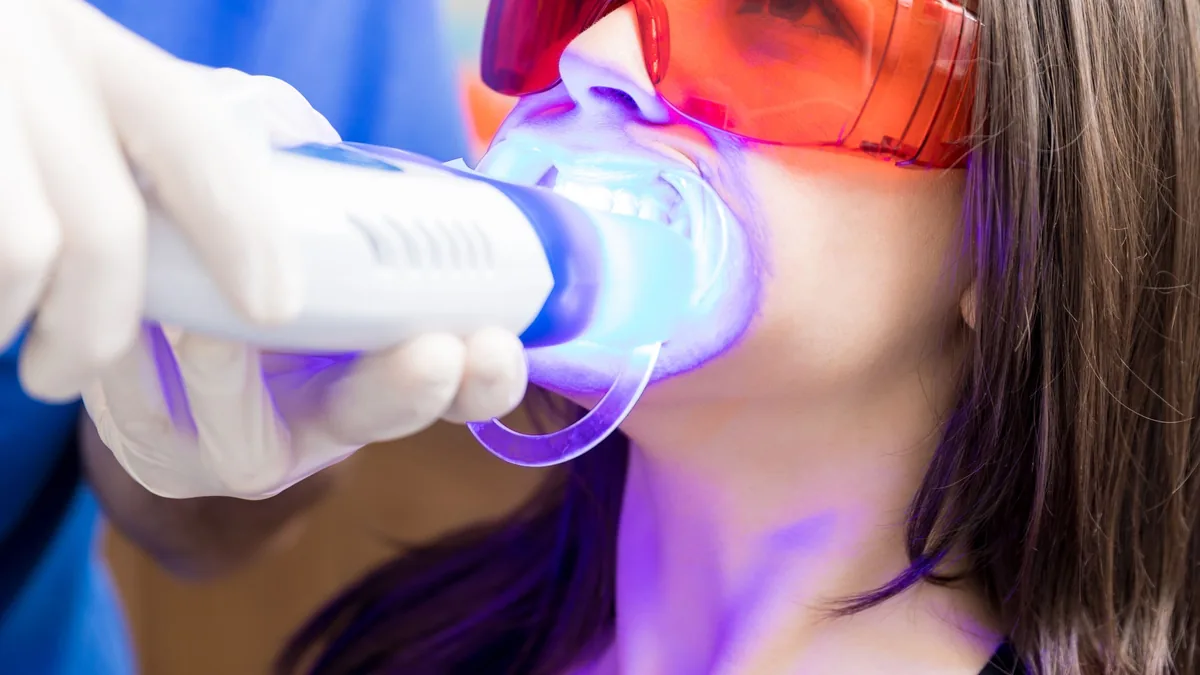
Professional Teeth Whitening in Beverly Hills
- Home
- Procedures
- Professional Teeth Whitening
A Brighter Smile With Dentist-Supervised Whitening
Coffee, tea, red wine, tobacco, aging, and other factors can gradually change the appearance of your teeth. Even with excellent brushing and professional dental cleanings, some discoloration remains within the tooth structure and cannot simply be polished away.
Professional teeth whitening is a cosmetic dental treatment that uses whitening agents to lighten discoloration in natural teeth and create a brighter smile.
At Beverly Hills Cosmetic & Implant Center, Dr. Tamir Shams evaluates your teeth, gums, existing restorations, and type of discoloration before recommending cosmetic treatment.
This is important because not every type of discoloration responds to whitening in the same way—and not every patient who wants whiter teeth necessarily needs the same treatment.
- What Is Professional Teeth Whitening?
- What Causes Teeth to Become Discolored?
- Surface Stains vs. Internal Tooth Discoloration
- Professional Teeth Whitening vs. Dental Cleaning
- Professional Whitening vs. Over-the-Counter Whitening
- Who Is a Candidate for Professional Teeth Whitening?
- Will Teeth Whitening Work on Crowns, Veneers, or Fillings?
- Can Professional Whitening Treat Every Type of Discoloration?
- Teeth Whitening vs. Porcelain Veneers
- What to Expect With Professional Teeth Whitening
- Does Professional Teeth Whitening Cause Sensitivity?
- How Long Do Teeth Whitening Results Last?
- How Can I Keep My Teeth Whiter After Treatment?
A 3D scan, a clear answer on which option fits you, and a written plan with timeline and cost. No obligation.
What Is Professional Teeth Whitening?
Professional teeth whitening is a cosmetic dental procedure designed to lighten the color of natural tooth enamel and dentin.
Whitening agents penetrate the tooth structure and interact with compounds responsible for certain types of discoloration.
Unlike a professional dental cleaning, which removes plaque, tartar, and some external surface stains, whitening is intended to change the appearance of discoloration within natural teeth.
Professional treatment also allows the dentist to evaluate whether whitening is appropriate before treatment begins.
What Causes Teeth to Become Discolored?
Tooth discoloration can develop for many reasons.
Common contributors include:
- Coffee
- Tea
- Red wine
- Dark-colored foods and beverages
- Tobacco use
- Natural aging
- Changes within tooth structure
- Certain medications
- Previous dental trauma
- Fluorosis or developmental discoloration
- Inconsistent oral hygiene
Understanding the cause of discoloration matters because it can influence how well the teeth respond to whitening.
Some stains respond very well, while others may require a different cosmetic approach.
Surface Stains vs. Internal Tooth Discoloration
Not all tooth discoloration is the same.
Extrinsic Discoloration
Extrinsic stains develop on the outer surface of the teeth and may be associated with coffee, tea, wine, tobacco, and other strongly pigmented substances.
Some of these stains can be reduced during a professional dental cleaning.
Intrinsic Discoloration
Intrinsic discoloration develops within the tooth structure.
It may be related to aging, medication exposure, dental trauma, developmental factors, or other causes.
Professional whitening can improve many forms of tooth discoloration, but certain intrinsic color changes may respond less predictably.
When whitening cannot provide the desired result, another cosmetic treatment may be considered.
Professional Teeth Whitening vs. Dental Cleaning
A dental cleaning and teeth whitening serve different purposes.
Professional Dental Cleaning
A cleaning removes:
- Plaque
- Tartar
- Bacterial deposits
- Certain external stains
Your teeth may appear cleaner or slightly brighter afterward, but cleaning does not substantially alter their natural underlying shade.
Professional Teeth Whitening
Whitening uses specific agents to lighten discoloration within natural tooth structure.
If your primary concern is plaque, tartar, or oral health, you need a cleaning.
If your teeth are healthy but you would like them to appear lighter, professional whitening may be appropriate.
Professional Whitening vs. Over-the-Counter Whitening
Drugstores and online retailers offer whitening toothpastes, strips, gels, rinses, and other products.
These products vary substantially in their ingredients, concentration, application method, and effectiveness.
Professional whitening differs because treatment begins with a dental evaluation.
Before whitening your teeth, Dr. Shams can assess:
- Tooth decay
- Gum health
- Existing sensitivity
- Cracks or damaged teeth
- Exposed root surfaces
- Existing crowns and veneers
- Composite fillings
- Type of discoloration
- Previous dental work
This helps determine whether whitening is appropriate and allows expectations to be based on the condition of your actual teeth rather than a generic whitening approach.
Who Is a Candidate for Professional Teeth Whitening?
Professional whitening may be appropriate for adults with healthy teeth and gums who would like to reduce certain types of discoloration.
It may be particularly useful for teeth affected by:
- Coffee and tea stains
- Wine-related discoloration
- Tobacco staining
- Food-related staining
- Natural darkening associated with aging
- General yellowing or dullness
However, whitening should not be performed simply because a tooth appears dark.
For example, discoloration involving a single tooth may sometimes indicate previous trauma, changes within the dental pulp, or another condition requiring evaluation.
The cause should be identified before cosmetic treatment begins.
Will Teeth Whitening Work on Crowns, Veneers, or Fillings?
This is one of the most important considerations before whitening.
Teeth whitening products lighten natural tooth structure. They do not predictably change the color of porcelain veneers, ceramic crowns, composite fillings, dental bridges, or implant crowns.
This matters if restorations are visible when you smile.
For example, whitening the surrounding natural teeth could create a shade difference between the newly whitened teeth and an existing crown or filling.
When extensive cosmetic dental treatment is being planned, whitening may sometimes be performed before selecting the final shade of new restorations.
This allows the color of veneers, crowns, or other restorations to be coordinated with the patient’s preferred natural tooth shade.
Can Professional Whitening Treat Every Type of Discoloration?
No.
Whitening can be highly effective for many patients, but results vary according to the type and cause of discoloration.
Certain stains or color changes may respond less completely to whitening.
These can include some cases involving:
- Significant intrinsic discoloration
- Developmental enamel changes
- Certain medication-related staining
- Dental trauma
- Existing restorations
- Significant variations in tooth color
When whitening alone cannot achieve the desired cosmetic change, porcelain veneers or another restorative treatmentmay sometimes be considered.
The appropriate solution depends on whether the concern involves color alone or also includes tooth shape, structure, spacing, wear, or alignment.
Teeth Whitening vs. Porcelain Veneers
Whitening and porcelain veneers can both create a brighter-looking smile, but they accomplish this in very different ways.
Teeth Whitening
Whitening changes the shade of natural teeth without intentionally changing their shape or size.
It may be appropriate when:
- Teeth are generally healthy
- Tooth shape is satisfactory
- Color is the primary concern
- Discoloration is likely to respond to whitening
Porcelain Veneers
Veneers are ceramic restorations bonded to the visible surfaces of selected teeth.
They can change:
- Color
- Shape
- Size
- Length
- Proportion
- Minor spacing
- Certain cosmetic alignment concerns
If color is the only concern, whitening may provide a more conservative starting point.
If multiple cosmetic characteristics need to be changed, veneers may be considered after a comprehensive evaluation.
What to Expect With Professional Teeth Whitening
Your exact treatment process depends on the whitening approach recommended for your individual needs.
In general, treatment begins with an evaluation of your teeth and gums.
Cosmetic Evaluation
Dr. Shams evaluates your oral health, existing restorations, tooth sensitivity, and type of discoloration.
Any active dental problems may need to be addressed before whitening begins.
Shade & Treatment Planning
Your current tooth shade and cosmetic goals are considered.
It is important to have realistic expectations because whitening results vary from patient to patient.
Whitening Treatment
A professional whitening agent is applied or provided according to the selected treatment protocol.
The objective is to lighten natural tooth structure while following appropriate instructions for the whitening system.
Maintaining Your Results
After treatment, your daily habits can influence how long the brighter appearance remains.
Periodic touch-up treatment may be appropriate for some patients.
Does Professional Teeth Whitening Cause Sensitivity?
Temporary tooth sensitivity can occur during or after whitening.
Sensitivity varies considerably between patients and can be influenced by:
- Existing tooth sensitivity
- Exposed root surfaces
- Condition of the enamel
- Whitening agent
- Treatment duration
- Frequency of treatment
Some patients experience little or no sensitivity, while others notice temporary sensitivity to cold or other stimuli.
A dental evaluation before treatment can help identify factors that may influence your whitening experience.
How Long Do Teeth Whitening Results Last?
Professional teeth whitening is not permanent.
Teeth can gradually accumulate new discoloration over time.
How long results remain noticeable depends on factors such as:
- Coffee and tea consumption
- Red wine
- Tobacco use
- Diet
- Oral hygiene
- Natural aging
- Individual tooth characteristics
Maintaining excellent oral hygiene and limiting frequent exposure to strongly pigmented substances may help preserve the appearance of your results.
Some patients may also choose periodic whitening touch-ups when appropriate.
How Can I Keep My Teeth Whiter After Treatment?
After whitening, maintaining your smile involves both preventive dental care and everyday habits.
Helpful measures include:
- Brushing regularly
- Flossing daily
- Maintaining professional dental cleanings
- Limiting frequent exposure to strongly staining foods and drinks
- Rinsing with water after consuming pigmented beverages
- Avoiding tobacco
- Following any recommended whitening maintenance protocol
You do not necessarily need to eliminate coffee, tea, or other favorite foods completely, but frequent exposure can influence how quickly discoloration returns.
Frequently Asked Questions About Professional Teeth Whitening
Professional teeth whitening is a cosmetic dental treatment that uses whitening agents to lighten certain types of discoloration within natural teeth. Treatment is planned after evaluating the condition of the teeth, gums, and existing dental restorations.
Professional whitening provides dentist-supervised treatment and allows your teeth, gums, restorations, and type of discoloration to be evaluated beforehand. Over-the-counter products vary in formulation and effectiveness. The best option depends on your oral health and desired outcome.
Whitening results vary. Your starting shade, type of discoloration, tooth structure, previous dental treatment, and response to the whitening agent all influence the final result. A specific number of shades cannot be guaranteed.
Some patients experience temporary tooth sensitivity during or after whitening, while others experience little or none. Sensitivity generally varies according to the individual and treatment used.
No. Whitening treatments are designed to lighten natural tooth structure and do not predictably change the color of porcelain veneers, ceramic crowns, composite fillings, or other restorations.
In some cosmetic cases, whitening natural teeth before creating new veneers or crowns can be beneficial. Once the desired natural tooth shade is established, new restorations can be selected to coordinate with that color. Treatment sequencing should be planned before restorative work begins.
No. Teeth can gradually become discolored again because of diet, habits, aging, and other factors. Maintenance and periodic touch-ups may help preserve the result.
Many forms of yellow discoloration respond well to professional whitening, but results vary. The cause and depth of discoloration influence how much improvement is possible.
Some types of intrinsic discoloration respond less predictably to whitening. If whitening cannot achieve the desired improvement, Dr. Shams can evaluate whether another cosmetic option, such as porcelain veneers, may be appropriate.
Discover a Brighter, Natural-Looking Smile
If your teeth have become darker, yellowed, or stained over time, professional teeth whitening may provide a conservative way to brighten your smile without changing the natural shape of your teeth.