Partial & Complete Dentures in Beverly Hills
- Home
- Procedures
- Partials & Dentures
Personalized Options for Replacing Multiple or All Missing Teeth
Missing multiple teeth can affect your ability to chew, speak, and smile comfortably. When many or all teeth are missing, partial and complete dentures provide removable options for restoring the appearance and function of your smile.
At Beverly Hills Cosmetic & Implant Center, tooth-replacement treatment is planned according to the number and location of missing teeth, condition of the remaining teeth, jawbone, bite, oral health, lifestyle, and personal preferences.
Depending on your needs, options may include a removable partial denture, complete denture, implant-retained denture, or fixed dental implant restoration.
Dr. Tamir Shams can explain the advantages and considerations of each approach so you can make an informed decision about how to rebuild your smile.
- What Are Dentures?
- What Is a Partial Denture?
- What Is a Complete Denture?
- What Are Immediate Dentures?
- Partial Dentures vs. Complete Dentures
- Conventional Dentures vs. Implant-Retained Dentures
- What Are Snap-On Dentures?
- Dentures vs. Fixed Full-Mouth Dental Implants
- Benefits of Dentures
- What to Expect When Getting Dentures
- Adjusting to New Dentures
- Caring for Dentures
- How Long Do Dentures Last?
A 3D scan, a clear answer on which option fits you, and a written plan with timeline and cost. No obligation.
What Are Dentures?
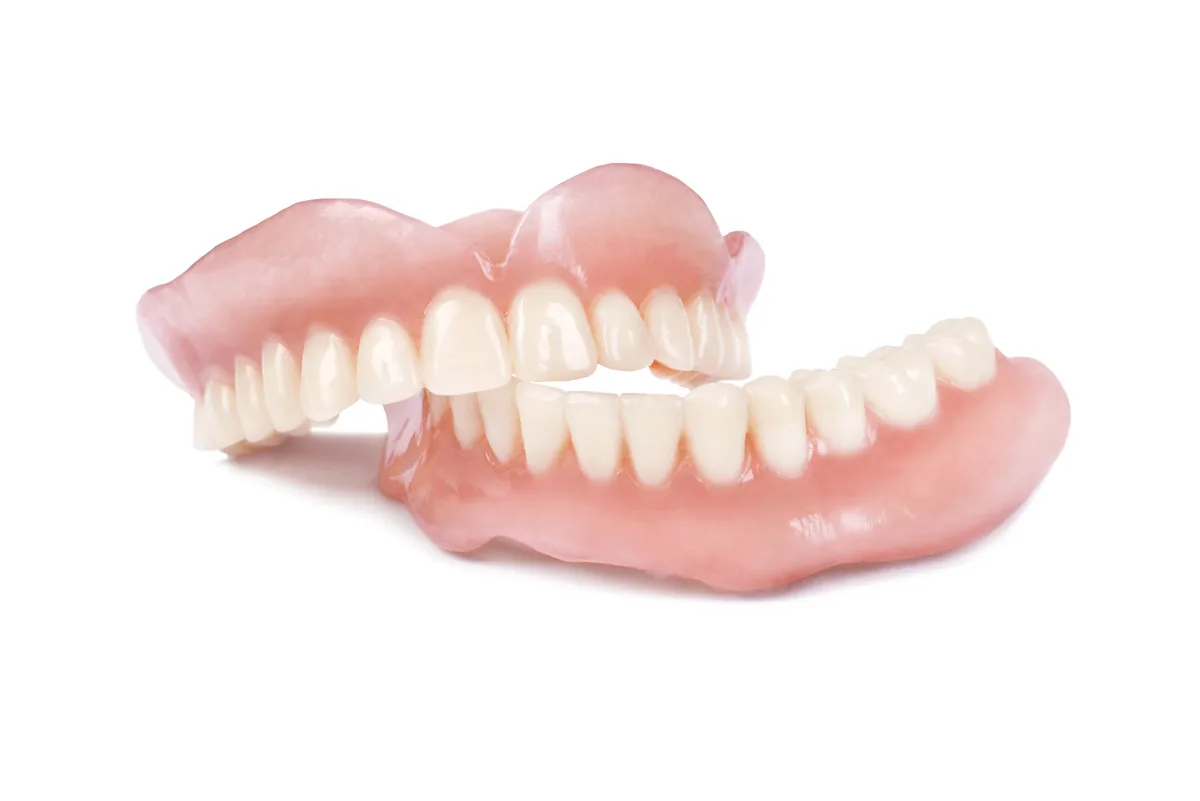
Dentures are dental prostheses designed to replace multiple missing teeth and the surrounding oral structures.
Unlike fixed dental bridges or implant-supported restorations that remain secured in the mouth, conventional dentures are removable by the patient.
There are two primary categories:
Partial dentures replace several missing teeth while some natural teeth remain.
Complete dentures replace an entire arch of missing teeth when no natural teeth remain in that arch.
Modern dentures are individually designed according to the patient’s mouth, bite, facial characteristics, and aesthetic goals.
What Is a Partial Denture?
A partial denture is a removable restoration used to replace multiple missing teeth when some healthy natural teeth remain in the upper or lower arch.
The replacement teeth are incorporated into a prosthesis designed to fit around and receive support from the remaining teeth and oral tissues.
Depending on the design, partial dentures may use clasps, attachments, or other components to help provide retention and stability.
A partial denture may be considered when:
- Several teeth are missing
- Healthy natural teeth remain
- Missing teeth are located in different areas
- A removable treatment is preferred
- Dental implants are not desired or appropriate
- A fixed bridge is not the preferred treatment
The condition of the remaining natural teeth is especially important because they contribute to the overall treatment plan.
What Is a Complete Denture?
A complete denture, also called a full denture, replaces all teeth in the upper or lower dental arch.
The prosthesis rests on the gums and underlying oral structures and is designed to restore the appearance of the missing teeth and surrounding tissues.
Complete dentures may be recommended for patients who have already lost all teeth in an arch or whose remaining teeth cannot be predictably maintained.
Treatment can involve the:
- Upper arch
- Lower arch
- Both arches
The design considers more than simply filling spaces with replacement teeth.
Tooth position, bite, facial support, speech, smile appearance, and comfort all play roles in creating the final denture.
What Are Immediate Dentures?
When multiple remaining teeth need to be extracted, an immediate denture may sometimes be planned before the teeth are removed.
The denture is then inserted around the time of extraction so the patient has a tooth-replacement option during the healing period.
However, the gums and jawbone change as extraction sites heal. Because of these changes, an immediate denture may require adjustments, relining, or eventual replacement.
Whether an immediate denture is appropriate depends on the individual treatment plan.
Partial Dentures vs. Complete Dentures
The primary difference is the number of natural teeth remaining.
Partial Denture
A partial denture replaces some missing teeth while preserving and incorporating remaining natural teeth into the treatment plan.
Complete Denture
A complete denture replaces an entire dental arch when no natural teeth remain in that arch.
Before recommending either option, Dr. Shams evaluates the health and long-term outlook of any remaining teeth.
When natural teeth can be predictably maintained, preserving them may influence which treatment is most appropriate.
Conventional Dentures vs. Implant-Retained Dentures
One of the most important decisions for patients considering dentures is whether the restoration will rely entirely on the gums and oral tissues or receive additional retention from dental implants.
Conventional Dentures
Traditional complete dentures rest on the gums and underlying tissues.
Their stability can be affected by:
- Jawbone anatomy
- Gum contours
- Saliva
- Muscle movement
- Fit of the prosthesis
- Changes in the jaw over time
Implant-Retained Dentures
Dental implants can be used to provide additional retention for certain removable dentures.
The denture connects to implant attachments, helping reduce unwanted movement compared with a conventional removable denture.
An implant-retained denture is still generally removable by the patient for cleaning, but the implants help hold it more securely while it is being worn.
This differs from a fixed full-arch implant restoration, which is secured to the implants and is not routinely removed by the patient.
What Are Snap-On Dentures?
Snap-on dentures are removable dentures designed to attach to dental implants for improved retention.
Depending on the treatment plan, multiple implants are strategically positioned within the jaw, and the denture connects to corresponding attachments.
The implants can provide additional stability while eating, speaking, and smiling.
Patients still remove the prosthesis for appropriate cleaning and maintenance.
The number and position of implants required depend on the jaw, available bone, anatomy, type of denture, and overall treatment plan.
Dentures vs. Fixed Full-Mouth Dental Implants
Patients missing an entire arch may have both removable and fixed tooth-replacement options.
Complete Dentures
A conventional denture is removable and generally rests on the gums.
Implant-Retained Dentures
Implants provide additional retention, but the denture remains removable by the patient.
Fixed Full-Arch Dental Implants
A full-arch restoration such as All-on-4 uses strategically positioned dental implants to support fixed replacement teeth that are not routinely removed by the patient.
Each approach has different requirements, advantages, maintenance needs, treatment timelines, and costs.
The appropriate solution depends on your oral health, available bone, functional goals, lifestyle, and preferences.
Benefits of Dentures
Depending on the type of restoration, dentures can provide several benefits.
Replace Multiple Missing Teeth
A single prosthesis can replace several teeth or an entire dental arch.
Restore Smile Appearance
Replacement teeth are selected and arranged with attention to tooth shape, size, shade, and overall smile appearance.
Support Everyday Function
Replacing missing teeth can improve the ability to chew a broader range of foods and may support clearer speech, although function varies according to the type and fit of the prosthesis.
Support Facial Appearance
Complete dentures replace teeth and some of the oral structures lost with extensive tooth loss, helping support the lips and lower facial profile.
Multiple Treatment Options
Patients can consider conventional removable dentures, implant-retained options, or fixed implant-supported restorations depending on their needs.
What to Expect When Getting Dentures
Comprehensive Evaluation
Dr. Shams evaluates your remaining teeth, gums, jawbone, bite, and overall oral health.
If dental implants are being considered, 3D imaging may also be used to evaluate available bone and anatomy.
Treatment Planning
Your options are reviewed according to how many teeth are missing and whether any remaining teeth can be maintained.
If extractions are necessary, their timing is incorporated into the plan.
Records & Denture Design
Detailed records are obtained to help establish the fit, bite, tooth position, and appearance of the planned restoration.
Fabrication
The denture is created according to your treatment plan and individual oral anatomy.
Fitting & Adjustments
The restoration is evaluated for fit, bite, appearance, and comfort.
Adjustments may be necessary as you adapt to the denture or as the oral tissues change.
Adjusting to New Dentures
New dentures can require an adjustment period.
Initially, patients may notice changes in:
- Speech
- Chewing
- Saliva production
- Muscle coordination
- Sensation in the mouth
Some areas may also become temporarily irritated as the mouth adapts to the new prosthesis.
Follow-up adjustments can improve fit and comfort when pressure areas develop.
Patients should not attempt to reshape or adjust a denture themselves, as this can damage the prosthesis or affect its fit.
Caring for Dentures
Proper care helps maintain both the prosthesis and the health of the mouth.
Depending on the type of denture, care may include:
- Cleaning the denture daily
- Removing food and plaque deposits
- Cleaning the gums, tongue, and remaining teeth
- Handling the denture carefully
- Following recommendations for overnight wear or removal
- Maintaining regular dental examinations
- Having fit evaluated as the mouth changes
Patients with partial dentures must pay particular attention to their remaining natural teeth because those teeth remain susceptible to decay and periodontal disease.
Implant-retained dentures also require careful cleaning around the implant attachments.
How Long Do Dentures Last?
Dentures are not necessarily lifetime restorations.
The prosthesis can wear over time, while the gums and jawbone beneath it naturally continue to change.
These changes may alter:
- Fit
- Stability
- Bite
- Comfort
- Appearance
A denture may eventually require adjustment, relining, repair, or replacement.
Regular dental examinations remain important even when a patient no longer has natural teeth because the fit of the prosthesis and health of the oral tissues should continue to be evaluated.
Frequently Asked Questions About Partials & Dentures
A partial denture replaces several missing teeth while some natural teeth remain. A full or complete denture replaces all teeth in an upper or lower dental arch.
Conventional partial and complete dentures are removable by the patient. Implant-retained dentures are also generally removable, while fixed full-arch implant restorations remain secured to dental implants and are not routinely removed by the patient.
Snap-on dentures are removable dentures that attach to dental implants for additional retention and stability. They can provide greater security than a conventional denture while still being removable for cleaning.
Implant-retained dentures can provide additional retention and reduce movement compared with conventional dentures. However, they require dental implant surgery and adequate clinical conditions. The best option depends on the patient’s anatomy, health, goals, and budget.
In certain cases, immediate dentures can be prepared before extraction and inserted around the time the teeth are removed. Because the gums and jawbone change during healing, adjustments or later replacement may be necessary.
Dentures can restore significant chewing ability, but adjusting to them takes time and function differs from natural teeth or fixed implant-supported restorations. Patients commonly begin with easier-to-chew foods while learning to use a new denture.
There is no universal replacement schedule. Denture materials wear and the mouth changes over time, so some prostheses eventually require relining, adjustment, repair, or replacement. Regular examinations help determine when changes are necessary.
Neither option is universally best. Dentures offer removable tooth replacement without requiring an implant for every missing tooth, while dental implants can provide additional stability or support fixed teeth. The appropriate treatment depends on the number of missing teeth, available bone, oral and medical health, lifestyle, treatment goals, and budget.
Find the Right Tooth-Replacement Option for You
If you are missing several teeth or an entire dental arch, there is more than one way to rebuild your smile.