Full Mouth Dental Implants in Beverly Hills
- Home
- Procedures
- Full Mouth Dental Implants
Rebuild a Complete Smile With Implant-Supported Teeth
If you are missing most or all of your teeth—or your remaining teeth can no longer be predictably restored—full mouth dental implants can rebuild your smile using dental implants to support an entire arch of replacement teeth.
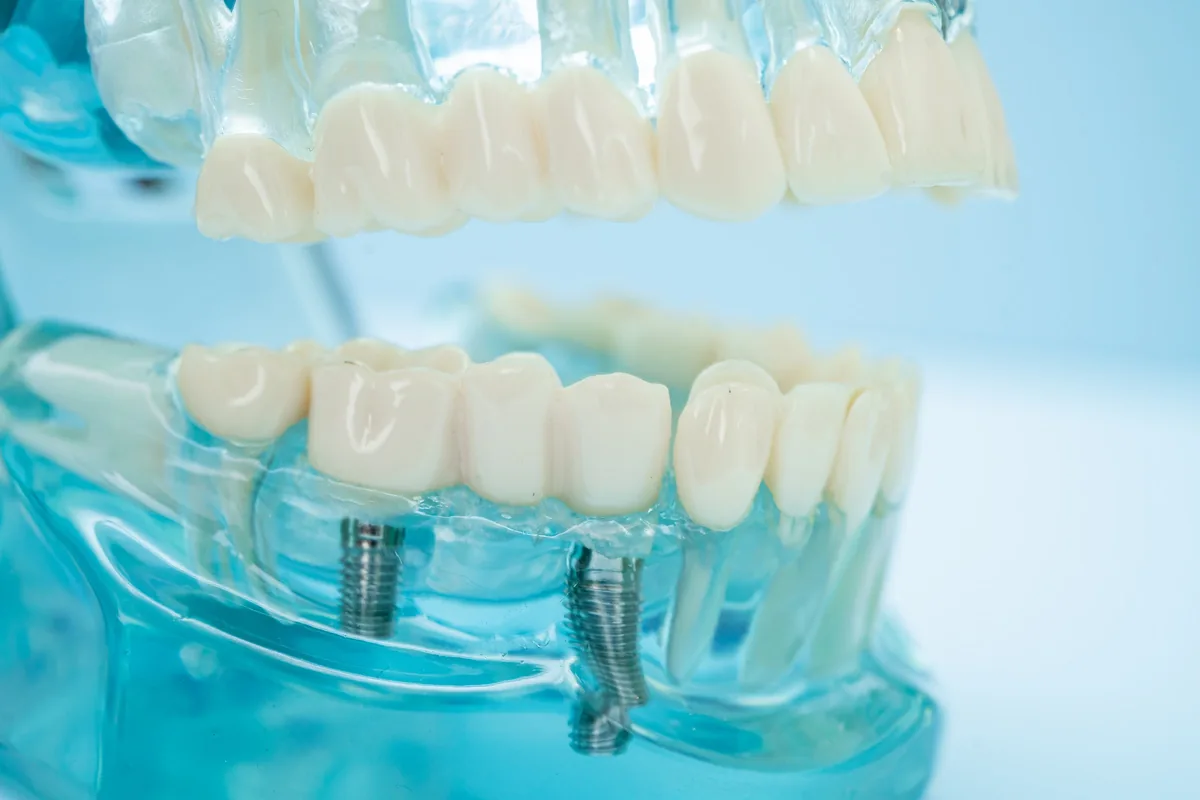
Unlike conventional removable dentures that rest primarily on the gums, implant-supported teeth are anchored to dental implants placed within the jawbone. Depending on your needs, your new teeth may be fixed in place or removable for cleaning.
At Beverly Hills Cosmetic & Implant Center, Dr. Tamir Shams plans, places, and restores full-mouth dental implants within one practice. With 19 years of dental implant experience and more than 2,000 implants placed, Dr. Shams provides several approaches to full-arch tooth replacement, including 3-on-6, All-on-4®, and snap-on implant-retained dentures.
Your treatment is personalized according to your bone structure, oral health, remaining teeth, bite, aesthetic goals, and preferences.
- What Are Full Mouth Dental Implants?
- Full Mouth Dental Implant Options
- Fixed vs. Removable Full-Mouth Dental Implants
- Who Is a Candidate for Full Mouth Dental Implants?
- 3D Planning for Full-Mouth Dental Implants
- What to Expect During Full Mouth Implant Treatment
- Recovery After Full Mouth Dental Implants
- How Long Do Full Mouth Dental Implants Last?
- How Much Do Full Mouth Dental Implants Cost in Beverly Hills?
A 3D scan, a clear answer on which option fits you, and a written plan with timeline and cost. No obligation.
What Are Full Mouth Dental Implants?
Full mouth dental implant treatment replaces most or all of the teeth in the upper jaw, lower jaw, or both arches.
Rather than placing one dental implant for every missing tooth, a carefully planned number of implants can be positioned throughout the jaw to support multiple replacement teeth.
Depending on the treatment selected, implants may support:
- A fixed full-arch restoration
- Multiple fixed bridge segments
- A removable implant-retained denture
This makes full-mouth implant treatment fundamentally different from replacing every missing tooth with an individual implant.
The goal is to restore a stable, functional bite while creating replacement teeth designed around your smile and facial appearance.
Full Mouth Dental Implant Options
There is no single full-mouth implant treatment that is right for every patient. Dr. Shams evaluates your anatomy, available bone, restorative needs, and preferences before recommending an approach.
3-on-6 Full-Arch Dental Implants
The 3-on-6 approach uses six dental implants to support three separate fixed bridge sections across an arch.
Rather than creating one continuous full-arch prosthesis, the replacement teeth are divided into three implant-supported bridge segments.
This treatment may be considered for patients with sufficient bone and anatomy to support six strategically positioned implants.
Potential advantages include a fixed restoration, distribution of support across six implants, and a restoration designed to closely reproduce the appearance and function of natural teeth.
All-on-4® Dental Implants
All-on-4 uses four strategically positioned dental implants to support a complete arch of fixed replacement teeth.
This approach can allow certain patients to replace an entire upper or lower arch without requiring an individual implant for each missing tooth.
For appropriately selected patients, a temporary fixed restoration may be attached to the implants on the day of surgery. After the implants have healed and integrated with the jawbone, the temporary teeth are replaced according to the final restorative plan.
Snap-On Implant-Retained Dentures
For patients who prefer a removable or potentially more affordable implant-supported option, snap-on dentures use dental implants to provide additional retention and stability for a removable denture.
Typically supported by multiple implants based on the patient’s individual treatment plan, the denture attaches securely to the implant system but can be removed by the patient for daily cleaning.
Compared with a conventional removable denture, implant retention can provide greater stability during everyday function.
Fixed vs. Removable Full-Mouth Dental Implants
One of the most important decisions in full-mouth implant treatment is whether your replacement teeth will be fixed or removable.
A fixed implant-supported restoration remains attached to the dental implants and is not routinely removed by the patient. All-on-4 and 3-on-6 are examples of fixed full-arch approaches offered at Beverly Hills Cosmetic & Implant Center.
A removable implant-retained denture attaches to implants for additional stability but can be removed by the patient for cleaning.
Neither approach is automatically best for everyone.
Factors such as available bone, oral hygiene needs, anatomy, restorative space, budget, desired aesthetics, and personal preference can influence the recommendation.
Dr. Shams will explain the differences and help you understand which option is most appropriate for your needs.
Who Is a Candidate for Full Mouth Dental Implants?
Full-mouth dental implants may be considered for patients who:
- Are missing most or all teeth in one or both arches
- Have multiple severely damaged or failing teeth
- Currently wear conventional dentures and want greater stability
- Want to explore fixed replacement teeth
- Have difficulty comfortably chewing with removable dentures
- Are considering comprehensive reconstruction rather than treating individual failing teeth separately
- Have sufficient bone for the proposed implant treatment or are candidates for appropriate preparatory procedures
A history of bone loss does not automatically disqualify you from dental implants.
Modern implant treatment provides several approaches for working with different patterns of available bone. Some patients may qualify for treatment without a separate bone graft, while others may require bone augmentation or another procedure.
The appropriate approach can only be determined after evaluating your individual anatomy.
3D Planning for Full-Mouth Dental Implants
Full-arch rehabilitation requires careful planning because implant position affects the support, function, and design of the final teeth.
At Beverly Hills Cosmetic & Implant Center, Dr. Shams uses cone-beam computed tomography (CBCT) to obtain three-dimensional information about your jawbone and surrounding anatomy.
Digital planning can help evaluate:
- Available bone
- Bone volume and anatomy
- Potential implant positions
- Surrounding anatomical structures
- Relationship between implant position and the planned restoration
Dr. Shams performs both the surgical placement and restorative phases of implant treatment, allowing the implants to be planned with the intended final teeth in mind.
What to Expect During Full Mouth Implant Treatment
Your exact treatment sequence depends on the type of full-mouth restoration you receive and your starting oral health.
Consultation & 3D Evaluation
Your treatment begins with a dental examination, imaging, and discussion of your concerns and goals. Dr. Shams evaluates your teeth, gums, jawbone, bite, and overall oral condition.
Personalized Treatment Planning
Based on your evaluation, Dr. Shams will discuss whether 3-on-6, All-on-4, snap-on dentures, or another approach is appropriate.
Your treatment plan will outline the recommended procedure, anticipated timeline, and cost.
Implant Placement
The dental implants are surgically positioned according to your treatment plan. Local anesthesia and appropriate sedation options may be used to help keep you comfortable during treatment.
Temporary Teeth When Appropriate
For qualifying fixed full-arch cases, temporary teeth may be attached on the day the implants are placed.
Not every patient qualifies for immediate loading. Implant stability, bone quality, bite forces, and other clinical considerations determine whether same-day temporary teeth are appropriate.
Healing & Implant Integration
Over the following months, the implants undergo osseointegration, the biological process through which the surrounding bone heals around and integrates with the implant surface.
Healing commonly takes several months and varies by patient and procedure.
Final Restoration
After appropriate healing, your final restoration is fabricated and fitted according to your restorative plan, with careful attention to fit, bite, function, and aesthetics.
Recovery After Full Mouth Dental Implants
Recovery varies according to the extent of surgery, number of implants, whether teeth are extracted, whether additional procedures are performed, and individual healing.
Swelling, soreness, bruising, and tenderness can occur during the initial recovery period. Dr. Shams will provide postoperative instructions and recommendations for managing discomfort, eating, oral hygiene, and caring for the surgical area.
Patients receiving temporary fixed teeth may also need to follow dietary restrictions while the implants heal.
Following these instructions is important because receiving temporary teeth does not mean the implants have finished integrating with the bone.
How Long Do Full Mouth Dental Implants Last?
Dental implants are designed as a long-term tooth-replacement solution, but no dental restoration can be guaranteed to last for a specific number of years.
Long-term success depends on factors including:
- Oral hygiene
- Gum and bone health
- Regular professional maintenance
- Smoking or tobacco use
- Medical conditions
- Bite forces and teeth grinding
- Implant position
- Restoration design
- Patient compliance with recommended care
The implant fixtures and the prosthetic teeth they support are also separate components. Even when implants remain healthy, the restoration may eventually require maintenance, repair, or replacement.
How Much Do Full Mouth Dental Implants Cost in Beverly Hills?
The cost of full-mouth dental implants varies significantly because there are several ways to restore a complete arch.
Your total cost may depend on:
- Whether one or both arches are treated
- Number of dental implants
- Type of full-arch restoration
- 3-on-6, All-on-4, or removable treatment
- Condition of your remaining teeth
- Available jawbone
- Need for extractions or additional procedures
- Materials selected for the final restoration
- Complexity of treatment
Full-arch treatment may be more efficient than replacing every missing tooth with an individual implant.
At your consultation, Beverly Hills Cosmetic & Implant Center will provide a written treatment plan with your recommended procedure, timeline, and cost.
Monthly financing options are available for qualified patients.
Frequently Asked Questions About Full Mouth Dental Implants
Yes. Dental implants can be used to support a complete upper or lower arch of replacement teeth. Rather than placing an implant for every missing tooth, strategically positioned implants can support a fixed or removable full-arch restoration.
The number varies according to the treatment. All-on-4 uses four implants to support a full arch, while the 3-on-6 approach uses six implants supporting three bridge segments. Implant-retained removable dentures may use a different number. Your anatomy and restorative plan determine the appropriate number.
All-on-4 uses four implants to support a complete fixed full-arch restoration. The 3-on-6 approach uses six implants to support three separate fixed bridge sections. Bone availability, anatomy, hygiene considerations, restorative needs, and other factors can influence which approach is appropriate.
Possibly. Bone loss does not automatically mean you cannot receive dental implants. Some full-arch approaches can utilize available bone strategically, while other patients may require bone grafting or another preparatory procedure. CBCT imaging helps Dr. Shams evaluate your anatomy and determine your options.
In certain cases, failing teeth can be removed and implants placed during the same appointment. Some qualifying patients may also receive temporary fixed teeth that day. Whether this is appropriate depends on your oral health, available bone, implant stability, and overall treatment plan.
They can be either fixed or removable. All-on-4 and 3-on-6 are fixed treatment approaches, while snap-on implant-retained dentures are removable by the patient for cleaning.
Treatment time varies. Patients who qualify may receive temporary fixed teeth on the day of implant surgery, but the implants still require time to integrate with the jawbone. Healing commonly occurs over several months before the definitive restorative phase is completed.
Dr. Tamir Shams, DMD, plans, places, and restores dental implants at Beverly Hills Cosmetic & Implant Center. He has practiced implant and cosmetic dentistry since 2007, has 19 years of implant experience, and has placed more than 2,000 dental implants.
Rebuild Your Smile With Full Mouth Dental Implants
If you are missing most or all of your teeth, struggling with dentures, or facing extensive tooth loss, you do not need to decide which implant solution is right for you before coming in.