Transform the Shape, Color, and Balance of Your Smile
Porcelain veneers can enhance the appearance of teeth that are discolored, chipped, worn, uneven, irregularly shaped, or affected by certain spacing concerns.
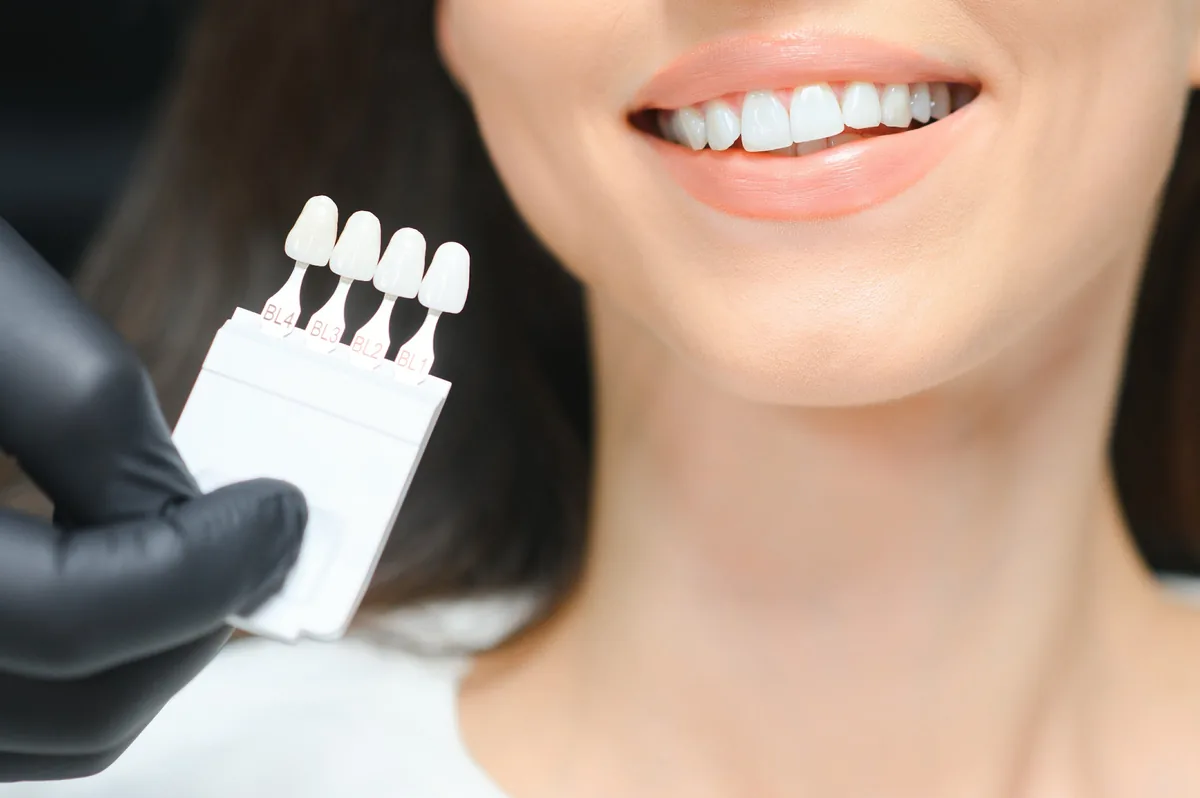
A porcelain veneer is a thin, custom-made ceramic restoration bonded to the front surface of a tooth. Rather than replacing the entire tooth, veneers are designed to modify its visible appearance while preserving as much healthy tooth structure as appropriate.
At Beverly Hills Cosmetic & Implant Center, Dr. Tamir Shams combines cosmetic dentistry, restorative principles, and personalized smile design to create veneers that complement each patient’s facial features, natural teeth, and individual goals.
The objective is not to give every patient the same smile. Your treatment is planned around creating a result that looks balanced, proportional, and natural for you.
- What Are Porcelain Veneers?
- What Can Porcelain Veneers Correct?
- Benefits of Porcelain Veneers
- Who Is a Candidate for Porcelain Veneers?
- Designing Natural-Looking Porcelain Veneers
- Porcelain Veneers vs. Dental Crowns
- Porcelain Veneers vs. Teeth Whitening
- What to Expect During the Porcelain Veneer Process
- Do Porcelain Veneers Require Removing Tooth Enamel?
- How Long Do Porcelain Veneers Last?
- Caring for Porcelain Veneers
A 3D scan, a clear answer on which option fits you, and a written plan with timeline and cost. No obligation.
What Are Porcelain Veneers?
Porcelain veneers are thin shells of dental ceramic individually designed to cover the visible front surfaces of selected teeth.
Once bonded into position, veneers can alter characteristics such as:
- Tooth color
- Shape
- Size
- Length
- Proportion
- Symmetry
- Spacing
- Overall smile appearance
Unlike teeth whitening, which primarily changes tooth color, veneers can address several cosmetic characteristics at the same time.
They are commonly used on the teeth that are most visible when a person smiles.
What Can Porcelain Veneers Correct?
Veneers may be considered for patients who want to improve the appearance of:
Discolored Teeth
Some types of discoloration do not respond sufficiently to professional teeth whitening. Porcelain veneers can mask selected discoloration and create a more uniform tooth color.
Chipped or Worn Teeth
Veneers can restore the visible shape and proportions of teeth affected by minor chips or wear when the underlying tooth remains appropriate for this type of restoration.
Uneven or Irregularly Shaped Teeth
Differences in tooth shape, length, or proportion can affect the overall balance of a smile. Veneers can be individually designed to create greater visual harmony.
Small Gaps Between Teeth
Certain spaces between teeth can be reduced cosmetically by modifying the width and shape of the teeth with veneers.
Not every gap should be treated with veneers, however. Larger spaces or bite-related concerns may be better addressed with orthodontic treatment.
Minor Alignment Concerns
In selected cases, veneers can improve the appearance of mildly uneven teeth.
Veneers do not actually move teeth, so patients with more significant crowding, rotation, or bite problems may benefit from orthodontic treatment instead.
Benefits of Porcelain Veneers
Porcelain veneers can provide several cosmetic advantages for appropriate candidates.
Customized Smile Design
Each veneer is designed according to the tooth being treated and its relationship to the surrounding smile.
Natural-Looking Dental Ceramic
Modern dental ceramics can reproduce many of the optical characteristics of natural enamel, including variations in translucency, brightness, and surface texture.
Addresses Multiple Cosmetic Concerns
Veneers can simultaneously improve tooth color, shape, proportions, minor spacing, and symmetry.
Stain Resistance
Dental porcelain is generally more resistant to staining than natural tooth enamel, although surrounding natural teeth can still change color over time.
Conservative Compared With Full-Coverage Crowns
Veneers primarily cover the visible surface of a tooth and may require less tooth reduction than a full dental crown in appropriate cases.
Who Is a Candidate for Porcelain Veneers?
Porcelain veneers may be appropriate for patients who have generally healthy teeth and gums but want to improve specific cosmetic characteristics of their smile.
Good candidates may have concerns such as:
- Permanent tooth discoloration
- Chipped teeth
- Worn tooth edges
- Uneven tooth shapes
- Disproportionately small teeth
- Minor spaces between teeth
- Mild cosmetic alignment concerns
- An uneven smile
Before recommending veneers, Dr. Shams evaluates more than appearance.
The health of the teeth and gums, amount of available enamel, bite, tooth position, existing restorations, and habits such as teeth grinding can all affect treatment recommendations.
Active decay or gum disease generally needs to be addressed before cosmetic veneer treatment begins.
Designing Natural-Looking Porcelain Veneers
Successful cosmetic dentistry involves more than selecting white teeth.
The size and shape of each tooth need to work with the patient’s overall smile and facial proportions.
When planning porcelain veneers, cosmetic considerations may include:
- Tooth length
- Tooth width
- Tooth proportions
- Smile symmetry
- Gumline
- Tooth shade
- Translucency
- Surface texture
- Relationship between neighboring teeth
- Lip and facial characteristics
- Bite
Some patients prefer a brighter and more uniform appearance, while others want subtle changes that closely reproduce the variations found in natural teeth.
Your goals should guide the design.
Porcelain Veneers vs. Dental Crowns
Veneers and crowns can both improve the appearance of teeth, but they are different restorations.
Porcelain Veneer
A veneer primarily covers the visible front surface of the tooth. It is generally used when the tooth is structurally healthy enough to remain largely intact but requires cosmetic modification.
Dental Crown
A crown covers substantially more of the tooth and is generally used when a tooth requires greater structural restoration because of significant damage, decay, fracture, wear, or previous dental treatment.
The decision should be based on the health and structural condition of the tooth—not simply on cosmetic preference.
When a veneer can accomplish the treatment goal while conserving more healthy tooth structure, it may be the more conservative restorative option.
Porcelain Veneers vs. Teeth Whitening
If tooth color is your primary concern, professional whitening may sometimes provide the desired improvement without altering the teeth.
Whitening changes the shade of natural tooth enamel but does not significantly change tooth shape, size, spacing, or proportions.
Porcelain veneers may be considered when:
- Discoloration does not respond adequately to whitening
- Tooth shape also needs improvement
- Multiple cosmetic concerns are being treated
- Existing enamel characteristics make whitening results less predictable
- The patient wants to modify both color and proportions
A cosmetic evaluation can determine which approach is more appropriate.
What to Expect During the Porcelain Veneer Process
Cosmetic Consultation
Dr. Shams evaluates your teeth, gums, bite, and smile while discussing what you would like to change.
This is also an opportunity to determine whether veneers are the most appropriate treatment or whether another cosmetic option may better achieve your goals.
Smile Planning
The shape, size, proportion, and desired shade of the veneers are planned in relation to your surrounding teeth and facial features.
Tooth Preparation
Depending on the individual case and veneer design, a conservative amount of tooth structure may need to be prepared to create space for the restoration.
The amount of preparation varies.
Temporary Veneers When Appropriate
Temporary restorations may be used while the final porcelain veneers are being fabricated, depending on the treatment plan.
Final Veneer Placement
The final veneers are evaluated for appearance, fit, and relationship to your bite before being bonded to the teeth.
Adjustments can be made as needed before treatment is completed.
Do Porcelain Veneers Require Removing Tooth Enamel?
Porcelain veneers commonly require some degree of tooth preparation, but the amount varies according to the tooth’s original position, shape, color, and the planned restoration.
The goal is to preserve as much healthy tooth structure as appropriate while creating enough space for the veneer to achieve the desired shape and appearance.
Because tooth preparation may be involved, porcelain veneers should generally be considered an irreversible dental treatment.
A careful evaluation is important before proceeding.
How Long Do Porcelain Veneers Last?
Porcelain veneers are designed as a long-term cosmetic restoration, but they do not have a guaranteed lifespan.
Longevity depends on factors such as:
- Oral hygiene
- Bite forces
- Teeth grinding or clenching
- Condition of the underlying teeth
- Gum health
- Diet and habits
- Trauma
- Professional dental maintenance
Veneers may eventually require repair or replacement.
Patients who grind or clench their teeth may be advised to use a protective nightguard to reduce excessive forces on their restorations.
Caring for Porcelain Veneers
Porcelain veneers should be maintained with consistent oral hygiene and professional dental care.
Recommended care generally includes:
- Brushing regularly
- Flossing daily
- Maintaining routine dental examinations
- Receiving professional cleanings
- Avoiding using teeth to open packages or bite hard objects
- Managing teeth grinding or clenching when present
Although porcelain itself cannot develop decay, the natural tooth underneath and around the veneer remains susceptible to dental problems.
Healthy teeth and gums are essential for maintaining cosmetic restorations.
Frequently Asked Questions About Porcelain Veneers
Porcelain veneers are thin, custom-made ceramic restorations bonded to the visible front surfaces of teeth. They can modify tooth color, shape, size, proportions, spacing, and overall appearance.
Porcelain veneers can be designed to reproduce characteristics of natural enamel, including translucency, texture, shape, and variations in shade. The final appearance depends on the design, materials, surrounding teeth, and individual treatment plan.
Veneers may require removal of some enamel to create appropriate space for the restoration. The amount varies by case. Treatment should be planned conservatively to preserve as much healthy tooth structure as appropriate.
Veneers can improve the appearance of certain mildly uneven or irregularly positioned teeth, but they do not move teeth. More significant alignment or bite problems may be better treated with orthodontics.
Veneers can sometimes close small spaces by modifying tooth width and proportions. Larger spaces or spacing caused by alignment and bite concerns may require a different treatment.
Dental porcelain is relatively resistant to staining. However, natural teeth surrounding the veneers can still change color, and the margins between the veneer and natural tooth require proper oral hygiene.
Veneers are designed as long-term restorations, but longevity varies. Oral hygiene, bite forces, grinding, gum health, habits, and regular professional care can all influence how long they remain functional and aesthetic.
Neither is universally better. Veneers are generally appropriate when a relatively healthy tooth requires primarily cosmetic modification. Crowns are typically used when a tooth requires more extensive structural restoration. A dental evaluation can determine which option is appropriate.
Discover What Porcelain Veneers Could Do for Your Smile
If you are considering veneers for discolored, chipped, worn, uneven, or irregularly shaped teeth, the first step is determining whether porcelain veneers are appropriate for your teeth and your goals.