
Root Canal Therapy in Beverly Hills
- Home
- Procedures
- Endodontic Therapy (Root Canal)
Treat Infection and Preserve Your Natural Tooth When Possible
A severely inflamed or infected tooth does not always need to be removed.
When the dental pulp inside a tooth becomes irreversibly inflamed, infected, or damaged, root canal therapy can remove the affected tissue, disinfect and seal the internal root canal system, and allow the natural tooth to remain in place when it is otherwise restorable.
Root canal treatment is also known as endodontic therapy.
At Beverly Hills Cosmetic & Implant Center, Dr. Tamir Shams evaluates the tooth, surrounding tissues, symptoms, and restorative condition to determine whether root canal therapy can appropriately preserve the tooth or whether another treatment should be considered.
The goal is not simply to stop a toothache. It is to address the source of the problem and create a foundation for restoring the tooth’s long-term function.
- What Is Root Canal Therapy?
- Why Would I Need a Root Canal?
- Signs You May Need a Root Canal
- What Causes an Infected Tooth?
- What Happens During a Root Canal?
- Do I Need a Crown After a Root Canal?
- Root Canal vs. Tooth Extraction
- Root Canal vs. Dental Implant
- Does a Root Canal Hurt?
- How Long Does a Root Canal Take?
- What Is a Dental Abscess?
- Will Antibiotics Cure an Infected Root Canal?
- What Happens After Root Canal Therapy?
- How Long Can a Root Canal-Treated Tooth Last?
A 3D scan, a clear answer on which option fits you, and a written plan with timeline and cost. No obligation.
What Is Root Canal Therapy?
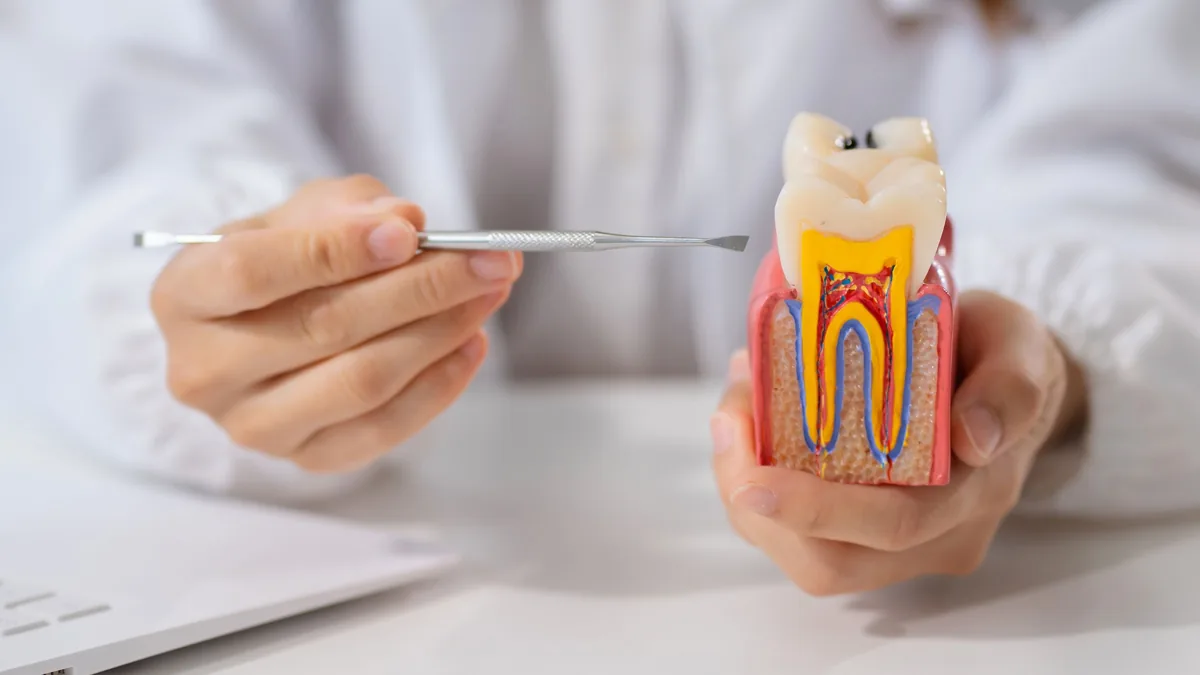
Inside every natural tooth is a space containing dental pulp.
The pulp contains:
- Nerves
- Blood vessels
- Connective tissue
It extends from the central portion of the tooth through narrow channels within its roots called root canals.
When this tissue becomes irreversibly inflamed, infected, or necrotic, it cannot always recover on its own.
Root canal therapy removes the affected pulp tissue from inside the tooth, cleans and disinfects the root canal system, and fills and seals the internal space.
The tooth can then be restored to protect the remaining structure and return it to function.
Why Would I Need a Root Canal?
Root canal therapy may be necessary when the dental pulp has been significantly damaged by decay, infection, trauma, cracks, or other conditions.
Common reasons include:
- Deep tooth decay
- A cracked or fractured tooth
- Significant dental trauma
- Infection within the tooth
- A dental abscess
- Repeated treatment on the same tooth
- Extensive restorative work
- Irreversible inflammation of the pulp
- Pulp tissue that has died
An examination and dental imaging can help determine whether the pulp is affected and whether root canal therapy is appropriate.
Signs You May Need a Root Canal
Symptoms vary considerably.
Possible signs of a pulp or root canal problem include:
- Persistent toothache
- Severe pain when biting or chewing
- Lingering sensitivity to hot or cold
- Swelling around a tooth
- Tender gums
- A pimple-like bump on the gum
- Tooth discoloration
- Facial or gum swelling
- Pain that seems to radiate to nearby areas
However, not every tooth that needs a root canal causes pain.
If the nerve tissue inside the tooth has died, symptoms may temporarily decrease even though infection remains.
This is one reason a dental evaluation is important rather than relying on pain alone.
What Causes an Infected Tooth?
The hard outer layers of a healthy tooth normally protect the pulp.
If bacteria gain access to the inner portion of the tooth, inflammation or infection can develop.
This may happen because of:
- Untreated dental decay
- Cracks
- Fractures
- Dental trauma
- Large or failing restorations
- Repeated dental procedures
- Structural damage
Once the pulp is irreversibly damaged or infected, simply placing a filling over the tooth does not treat the problem inside the root canal system.
Endodontic treatment may then be required.
What Happens During a Root Canal?
Although the exact procedure varies according to the tooth and complexity of its anatomy, root canal treatment generally involves several stages.
Examination & Diagnosis
Dr. Shams evaluates the tooth, symptoms, surrounding tissues, and dental history.
Dental X-rays or other appropriate imaging may be used to evaluate the tooth roots and surrounding bone.
Local Anesthesia
The treatment area is numbed with local anesthesia to maintain comfort during the procedure.
Accessing the Tooth
A small opening is created in the tooth to access the pulp chamber and root canal system.
Removing the Affected Pulp
Inflamed, infected, or damaged pulp tissue is removed from inside the tooth and root canals.
Cleaning & Shaping the Root Canals
The internal canal spaces are carefully cleaned, disinfected, and shaped in preparation for sealing.
Filling the Root Canal System
The cleaned root canals are filled and sealed with endodontic materials to close the internal space.
Restoring the Tooth
After endodontic treatment, the tooth requires an appropriate final restoration.
Depending on the amount of remaining tooth structure, tooth location, and functional demands, this may involve a filling, onlay, or dental crown.
Do I Need a Crown After a Root Canal?
Many root canal-treated teeth—particularly back teeth—require significant restorative protection after treatment.
This is not simply because a root canal makes a tooth “dead” or automatically brittle.
Often, the tooth was already structurally compromised by:
- Deep decay
- Large fillings
- Fracture
- Previous dental treatment
- Loss of tooth structure required to access and treat the pulp
A dental crown or another appropriate restoration can protect the remaining tooth structure and restore chewing function.
Not every root canal-treated tooth automatically requires the same restoration.
The decision depends on:
- Tooth location
- Amount of healthy structure remaining
- Existing restorations
- Bite forces
- Presence of cracks or fractures
- Functional demands
Dr. Shams evaluates the tooth after endodontic treatment to determine the appropriate final restoration.
Root Canal vs. Tooth Extraction
When a tooth is severely infected or damaged, patients may wonder whether it is better to have a root canal or simply remove the tooth.
Root Canal Therapy
If the tooth is restorable and has adequate periodontal and structural support, root canal therapy may allow the natural tooth to remain in place.
Preserving the tooth avoids creating a new space that then requires consideration for replacement.
Tooth Extraction
Extraction may be appropriate when a tooth cannot be predictably restored because of factors such as:
- Severe structural damage
- Certain deep fractures
- Insufficient remaining tooth structure
- Significant periodontal support loss
- Other conditions affecting prognosis
If the tooth is removed, replacement options may include a dental implant, implant-supported bridge, traditional bridge, or removable prosthesis depending on the situation.
The best treatment is not automatically the root canal or the extraction. It depends on the long-term prognosis of the individual tooth.
Root Canal vs. Dental Implant
A root canal and a dental implant treat two fundamentally different situations.
Root canal therapy treats and preserves an existing natural tooth.
A dental implant replaces a tooth that has already been lost or needs to be extracted.
When a natural tooth can be predictably treated and restored, preserving it may be appropriate.
When a tooth has a poor restorative prognosis, extraction followed by implant treatment may sometimes provide a more suitable long-term plan.
At Beverly Hills Cosmetic & Implant Center, Dr. Shams provides both restorative dentistry and dental implant treatment. This allows the condition and prognosis of the existing tooth to be considered alongside potential replacement options when making treatment decisions.
Does a Root Canal Hurt?
Root canal therapy is performed using local anesthesia to maintain comfort during treatment.
Patients seek root canal treatment because the tooth itself may already be painful or inflamed.
After treatment, temporary tenderness or sensitivity around the tooth can occur as the surrounding tissues recover.
The experience varies depending on:
- Severity of the original inflammation or infection
- Tooth anatomy
- Treatment complexity
- Individual sensitivity
- Condition of surrounding tissues
Persistent or worsening pain or swelling should be evaluated.
How Long Does a Root Canal Take?
The time and number of appointments required vary.
Factors include:
- Which tooth is being treated
- Number and complexity of root canals
- Degree of infection
- Previous treatment
- Tooth anatomy
- Need for additional procedures
Some root canals may be completed in a single treatment visit, while others may require additional appointments.
A more specific timeline can be provided after the tooth is evaluated.
What Is a Dental Abscess?
A dental abscess is a localized collection of infection that can develop when bacteria spread from the tooth or surrounding tissues.
When infection originates within the dental pulp, it can extend through the root and affect tissues around the end of the tooth.
Possible symptoms include:
- Significant tooth pain
- Pain with chewing
- Gum swelling
- Facial swelling
- A pimple-like bump on the gum
- Bad taste or drainage
- Fever or feeling unwell in more serious cases
A dental abscess requires professional evaluation.
Treatment depends on the source and severity of the infection and may include root canal therapy, drainage, extraction, or other care.
Will Antibiotics Cure an Infected Root Canal?
Antibiotics can be important when certain dental infections are spreading or associated with systemic symptoms, but antibiotics alone generally do not eliminate infected or necrotic tissue contained within the root canal system.
Definitive dental treatment is usually required to address the source.
Depending on the tooth, that may involve:
- Root canal therapy
- Drainage when appropriate
- Tooth extraction
Antibiotics should be used when clinically indicated rather than as a substitute for necessary dental treatment.
What Happens After Root Canal Therapy?
After treatment, temporary tenderness around the tooth can occur.
Patients should follow the instructions provided for:
- Oral hygiene
- Eating and chewing
- Medication when indicated
- Temporary restorations
- Follow-up care
Until the tooth receives its definitive restoration, additional caution may be necessary when chewing on it.
Completing the final restoration is an important part of treatment.
A successfully treated root canal does not eliminate the need to protect and maintain the remaining natural tooth.
How Long Can a Root Canal-Treated Tooth Last?
Root canal therapy is intended to preserve the natural tooth for long-term function, but no specific lifespan can be guaranteed.
Longevity depends on factors such as:
- Initial condition of the tooth
- Quality and complexity of endodontic treatment
- Amount of remaining tooth structure
- Final restoration
- Periodontal health
- Bite forces
- Oral hygiene
- New decay
- Cracks or fractures
- Professional dental maintenance
Regular examinations remain important because a root canal-treated tooth can still develop new decay, periodontal problems, fractures, or other dental conditions.
Frequently Asked Questions About Root Canal Therapy
A root canal is an endodontic procedure that removes inflamed, infected, or damaged pulp from inside a tooth. The internal root canal system is then cleaned, disinfected, filled, and sealed so the natural tooth can remain when it is otherwise restorable.
Persistent tooth pain, lingering temperature sensitivity, pain when chewing, swelling, or a gum abscess can indicate a pulp problem. However, some teeth requiring root canal treatment have few or no symptoms. A dental examination and appropriate imaging are needed for diagnosis.
Local anesthesia is used to maintain comfort during treatment. Some temporary tenderness may occur afterward, particularly if the tissues surrounding the tooth were already inflamed or infected.
If a tooth can be predictably treated and restored, root canal therapy may allow you to preserve it. Extraction may be more appropriate when a tooth has severe structural damage, an unfavorable fracture, inadequate periodontal support, or another condition resulting in a poor prognosis.
Many root canal-treated teeth, particularly molars and premolars, require a crown or another protective restoration because substantial tooth structure has been lost. However, the appropriate restoration depends on the individual tooth.
Antibiotics may be appropriate for certain spreading or systemic infections, but they generally cannot eliminate infected or dead pulp tissue inside the root canal system. The source usually requires definitive dental treatment.
Yes. Although root canal therapy is designed to treat infection within the tooth, reinfection can occur for several reasons, including new decay, leakage, fracture, or persistent bacteria within complex root anatomy. Additional evaluation and treatment may be necessary.
An untreated infection can continue to affect the tissues around the tooth and may lead to increasing pain, abscess formation, swelling, bone involvement, or eventual loss of the tooth. Dental infections should be professionally evaluated rather than left untreated.
Preserve Your Natural Tooth When Possible
Severe tooth pain or infection does not automatically mean the tooth needs to be extracted.